Providing Economic Development, Geographic Information Systems, Intergovernmental Cooperation, Land Use Planning and Transportation Assistance since 1973
The Comprehensive Planning Process was overseen by the Plan Commission, who met several times with staff from North Central Wisconsin Regional Planning Commission to review the 2006 plan, analyze updated data, draft new goals, and develop a new Future Land Use map. This process took approximately nine months, culminating in the adoption of this Plan
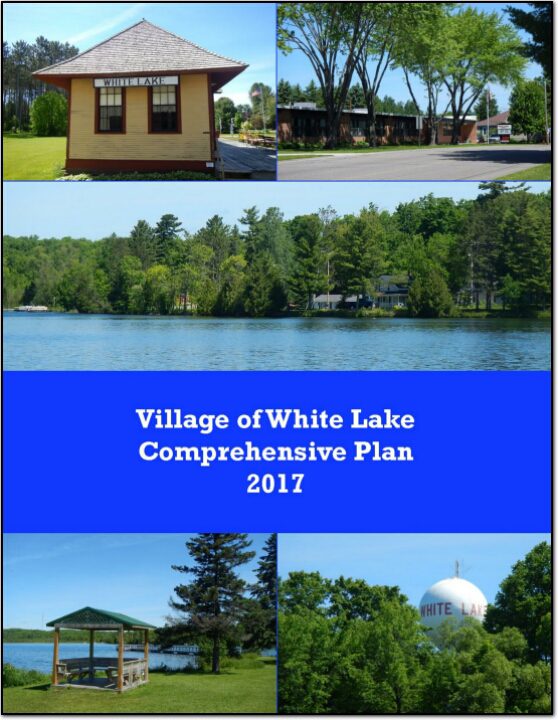
The Plan provides detailed information on the Village, and uses that information, trends, planning principles and public input to form a guide for future decision making. This process has included a comprehensive review of past and current development activities and projected changes forecasted over a future 20-year planning horizon.
The Comprehensive Planning Process was overseen by the Plan Commission, who met several times with staff from North Central Wisconsin Regional Planning Commission to review the 2006 plan, analyze updated data, draft new goals, and develop a new Future Land Use map. This process took approximately nine months, culminating in the adoption of this Plan.
The Annual Report is prepared to provide interested local, state, and federal officials as well as citizens with an overview of the activities undertaken by the NCWRPC over the last year. The report highlights our five core work areas:
• Economic Development • Geographic Information Systems • Intergovernmental Cooperation • Land Use, and • Transportation
In addition, the report meets the requirements as outlined in Wisconsin Statute 66.0309(8)(b) for annual report preparation. This is our 43rd Annual Report. With your continued support, we look forward to another successful year in 2017.
The Comprehensive Planning Process was overseen by the Plan Commission, who met several times with staff from North Central Wisconsin Regional Planning Commission to review the 2004 plan, analyze updated data, draft new goals, and develop a new Future Land Use map. This process took approximately nine months, culminating in the adoption of this Plan.
An assessment of economic development activities of the North Central Wisconsin Regional Planning Commission over the last decade and the past year. The report’s seven sections describe the CEDS Committee, Past Year’s Activities, the Physical Region, Changes in the Region’s Population, changes in the Region’s Economy, a Regional Development Strategy, and an Economic Development Work Plan. Also included is a list of potential public works projects. This CEDS process maintains the Region’s eligibility as an Economic Development District (EDD) with the U.S. Economic Development Administration. The District consists of ten counties. These counties are Adams, Forest, Juneau, Langlade, Lincoln, Marathon, Oneida, Portage, Vilas, and Wood. However, Portage, and Wood Counties do not fully participate in the EDD – only some local communities with these two Counties participate.
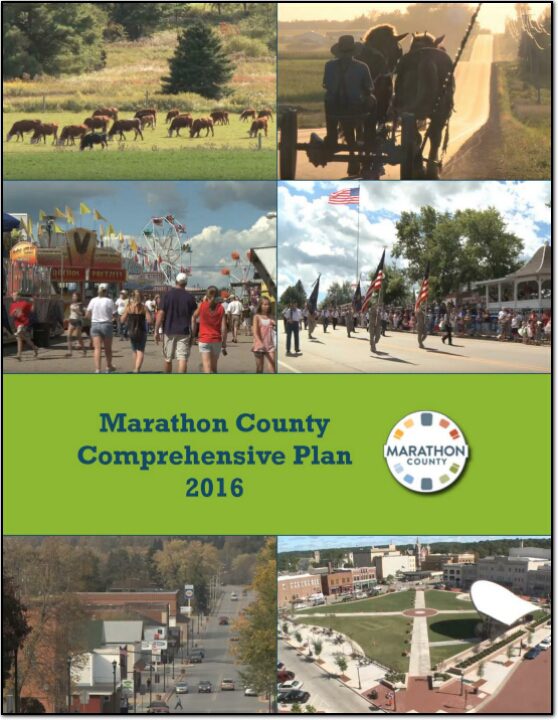
The Marathon County Comprehensive Plan will help guide County decision makers on a wide array of issues over the next twenty years. It will also provide guidance to the 41 towns, 15 villages and 6 cities within the County. All these communities, working together, make Marathon County a special place.
Currently, the 135,000 County residents enjoy economic opportunity, quality schools, and strong communities, along with access to a wide variety of recreational options. Although, the County compares well when compared to other counties there is still room for improvement. An overarching goal of Marathon County is to become the Healthiest, Safest and Most Prosperous County in the State. Therefore, the intent of this plan is to provide the foundation for that improvement.
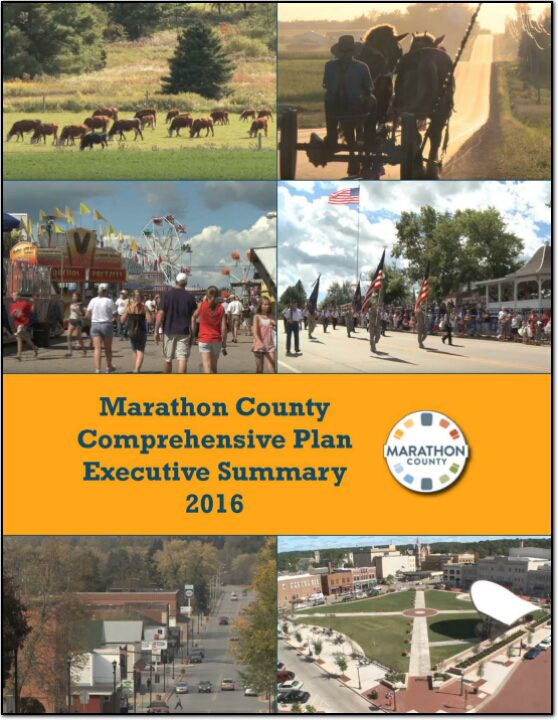
The Executive Summary includes a brief overview of the Marathon County Comprehensive Plan which was adopted in February, 2016. The purpose of this summary is to provide a snapshot of the plan and provide guidance on where to look in the full plan for more detailed information and direction.