Providing Economic Development, Geographic Information Systems, Intergovernmental Cooperation, Land Use Planning and Transportation Assistance since 1973
Spencer updates its Outdoor Recreation Plan every 5 years to identify essential outdoor recreation needs that affect the future of outdoor recreation in the Village.
This Outdoor Recreation Plan (ORP) focuses upon Village managed outdoor recreation facilities. All listed nature based and active recreation based projects become eligible for competitive federal and state outdoor recreation grant money when this plan is adopted by Village Board resolution.
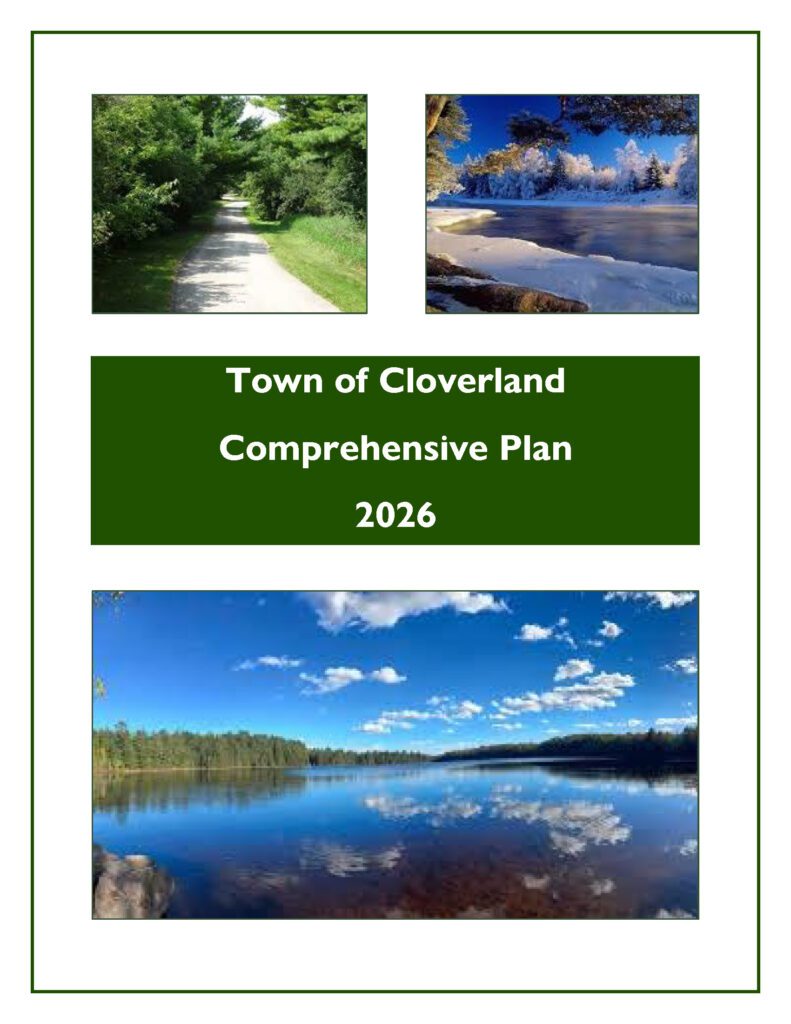
The purpose of a Comprehensive Plan is to guide future growth and development in the Town over the next 10 to 20 years. A comprehensive plan provides the vision and direction for natural resource protection, housing and economic development, transportation and community facilities, land use, intergovernmental relations, and other factors that together form the community’s future. Comprehensive planning was enacted to encourage long-range planning for communities and provide consistency in land use decision making. The Comprehensive Plan is a guide that elected officials, residents, and business owners can use for directing growth and redevelopment in the community. The Comprehensive Plan is a long-range policy document consisting of goals, objectives, and policies prepared to meet the State’s definition of a comprehensive plan as defined under Section 66.1001.
A public hearing for comments on the Town of Cloverland Comprehensive Plan will be held at the Cloverland Town Hall on January 7, 2026, at 11 AM. More information about the Public Hearing can be found in the link below:
Kronenwetter updates its Outdoor Recreation Plan every 5 years to identify essential outdoor recreation needs that affect the future of outdoor recreation in the Village.
This Outdoor Recreation Plan (ORP) focuses upon Village managed outdoor recreation facilities. All listed nature based and active recreation based projects become eligible for competitive federal and state outdoor recreation grant money when this plan is adopted by Village Board resolution.
A comprehensive plan is a local government’s guide to community physical, social, and economic development. Comprehensive plans are not meant to serve as land use regulations in themselves; instead, they provide a rational basis for local land use decisions with a twenty-year horizon for future planning and community decisions.
The Adams County Land and Water Resource Management (LWRM) plan was developed to assist the county in managing and protecting the land and water resources throughout Adams County.
At the root of the county Land and Water Resource Management (LWRM) plan concept is the cooperation and coordination of all agencies and groups within the county that have a role in land and water resource management. This plan coordinates everyone’s efforts, and focuses on how the County’s Land and Water Conservation Department will work with the other agencies.
Land and Water Resource Management (LWRM) Plans provide counties an opportunity to explain how they will meet the state performance standards and prohibitions (NR 151 and ATCP 50) to reduce runoff and protect water quality, as well as address other local land and water resource management concerns. The LWRM Plan provides the counties with the ability to develop local strategies to address the concerns; budget the limited staff and cost share dollars toward these concerns; provide for integration of programs and funding from all sources; and develop a variety of implementation tools.
The Wood County Ad Hoc Bike & Pedestrian Committee is overseeing the development of the Wood County Bike & Pedestrian Plan.
The Wood County Bicycle & Pedestrian Plan includes:
An inventory of bicycling conditions and sidewalks, bicycle and pedestrian crashes with vehicles, and bicycle and pedestrian use areas. Researching where crashes occurred will show where some problem areas exist. Other problem locations will be found through analysis of the bicycling conditions on each major road.
Locations of potential bicycle routes and recommendations for roadway improvements. Maps will show where people are riding and where they plan to ride when it is safer to do so. Recommendation may include bicycle lanes in high traffic areas, and possibly no change along roads used more by bicyclists than vehicles (e.g. low volume roads).
Recommend solutions. The plan will include a combination of education, encouragement, engineering, and enforcement strategies to increase walking and biking.
Langlade County All Hazards Mitigation Plan (AHMP) Update describes and documents the process used to develop the plan update. This includes how it was prepared and who (committee, organizations, departments, staff, consultants, etc.) was involved in the update process. It also describes the local government involvement, the time period in which the update was prepared, and who to contact to answer questions and make recommendations for future amendments to the plan.
Adams County All Hazards Mitigation Plan (AHMP) Update describes and documents the process used to develop the plan update. This includes how it was prepared and who (committee, organizations, departments, staff, consultants, etc.) was involved in the update process. It also describes the local government involvement, the time period in which the update was prepared, and who to contact to answer questions and make recommendations for future amendments to the plan.
Part I of the Forest County All Hazards Mitigation Plan (AHMP) Update describes and documents the process used to develop the Plan Update. This includes how it was prepared and who (committee, organizations, departments, staff, consultants, etc.) was involved in the update process. It also describes the local governments involvement, the time period in which the update was prepared, and who to contact to answer questions and make recommendations for future amendments to the Plan.