Providing Economic Development, Geographic Information Systems, Intergovernmental Cooperation, Land Use Planning and Transportation Assistance since 1973
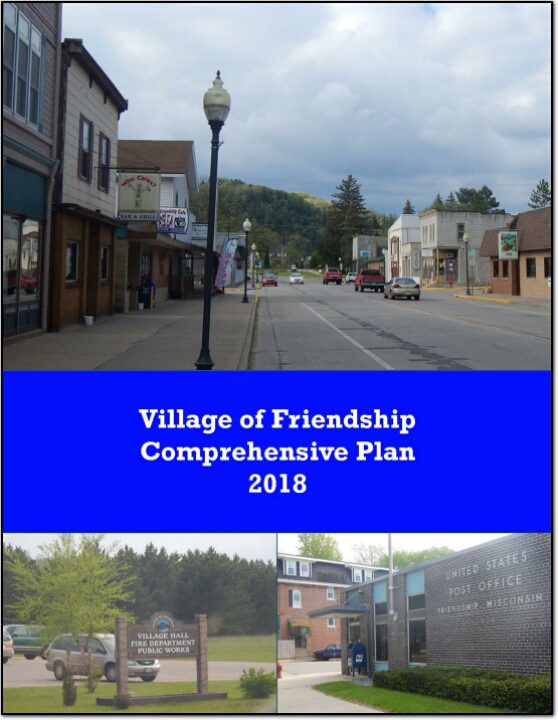
The City of Adams Comprehensive Plan is tended to guide city and county decision makers on a variety of issues over the next twenty years. This plan documents existing conditions in the City and identified primary issues or convers to address in the future and identifies policies and actions to address those concerns. It includes information that assists in making decisions about such topics as future development, land use, transportation, housing and economic development.
The purpose of a Comprehensive Plan is to guide future growth and development in the Town over the next 10 to 20 years. A comprehensive plan provides the vision and direction for natural resource protection, housing and economic development, transportation and community facilities, land use, intergovernmental relations, and other factors that together form the community’s future. Comprehensive planning was enacted to encourage long-range planning for communities and provide consistency in land use decision making. The Comprehensive Plan is a guide that elected officials, residents, and business owners can use for directing growth and redevelopment in the community. The Comprehensive Plan is a long-range policy document consisting of goals, objectives, and policies prepared to meet the State’s definition of a comprehensive plan as defined under Section 66.1001.
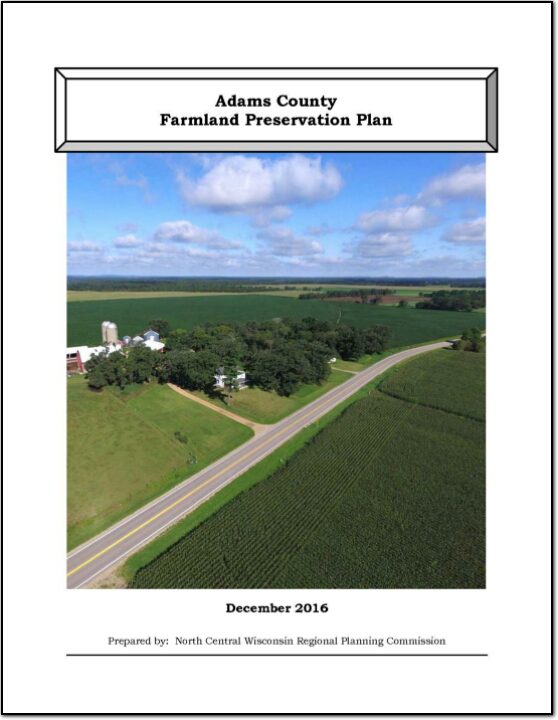
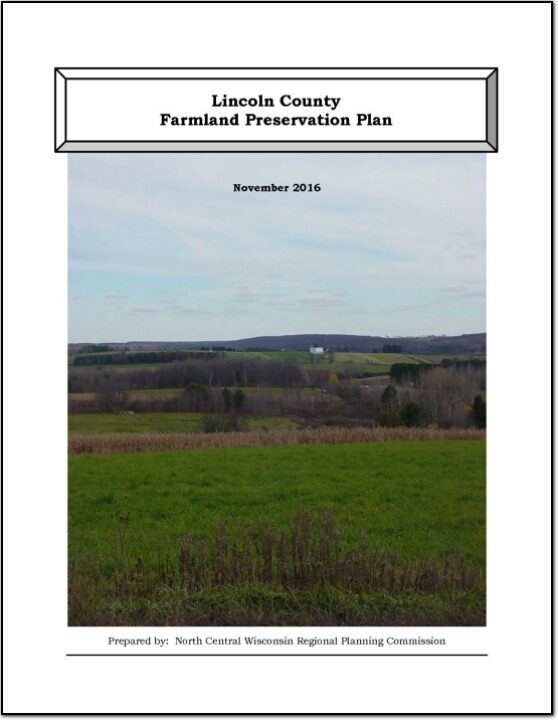
In 2010, agriculture constituted a $59 billion industry in Wisconsin. Farmland around the country is being lost at an alarming rate, and, once it is gone, we cannot get it back. Farmland preservation planning is crucial to preserve the agricultural land remaining in Wisconsin, because of the economic importance of agriculture in the State and the potential for loss of our agricultural land base.
County leaders are aware of the need for a strategic comprehensive plan addressing economic development. The purpose of this chapter is to provide the economic context by presenting an economic history of the county and an overview of previous planning processes on the local, regional, and state levels.
The Lincoln County Land and Water Resource Management (LWRM) plan was developed to assist the County in managing and protecting the land and water resources throughout Lincoln County.
At the root of the county Land and Water Resource Management (LWRM) plan concept is the cooperation and coordination of all agencies and groups within the county that have a role in land and water resource management. This plan coordinates everyone’s efforts, and focuses on how the County’s Land and Water Conservation Department will work with the other agencies.
Land and Water Resource Management (LWRM) Plans provide counties an opportunity to explain how they will meet the state performance standards and prohibitions (NR 151 and ATCP 50) to reduce runoff and protect water quality, as well as address other local land and water resource management concerns. The LWRM Plan provides the counties with the ability to develop local strategies to address the concerns; budget the limited staff and cost share dollars toward these concerns; provide for integration of programs and funding from all sources; and develop a variety of implementation tools..
In 2010, agriculture constituted a $59 billion industry in Wisconsin. Farmland around the country is being lost at an alarming rate, and, once it is gone, we cannot get it back. Farmland preservation planning is crucial to preserve the agricultural land remaining in Wisconsin, because of the economic importance of agriculture in the State and the potential for loss of our agricultural land base.
The Comprehensive Planning Process was overseen by the Plan Commission, who met several times with staff from North Central Wisconsin Regional Planning Commission to review the 2006 plan, analyze updated data, draft new goals, and develop a new Future Land Use map. This process took approximately nine months, culminating in the adoption of this Plan