ReLeaf Cedar Rapids, Iowa & WDNR Urban Tree Planting Resources

ReLeaf Cedar Rapids was created to restore the city’s urban tree canopy after a devastating derecho storm destroyed nearly two-thirds of its trees on August 10, 2020.

Many of ReLeaf’s urban reforestation chapters can apply to other communities that have been hit by a tornado.

Use the USDA Plant Hardiness Zone Map Online Viewer to see what zone your community lies in to determine if a tree will grow in your community. HOW TO APPLY A USDA Zone: For example, Wausau WI is in Zone 5a, but is surrounded by Zone 4b. A person is Wausau should choose a tree that can grow in at least a Zone 4 or lower to accommodate a long stretch of freezing temperatures without snow, and on the warm side, that same Wausau person should pick Zone 6. Therefore, a Wausau person should choose trees that can grow in at least Zones 4 to 6. A tree that can grow in Zones 2 to 8 would also thrive in Wausau.

*******************************************************

Wisconsin Dept. of Natural Resources has a reforestation website:
URBAN TREE PLANTING RESOURCES (WDNR website)

  • How to plant an urban tree
  • Tree Species Selection
  • Site Assessment

Economic Profiles 2026

Every few years, NCWRPC updates basic demographic and economic development information in the form of County Profiles, which provide a snapshot of current economic trends and opportunities for economic growth. Included is a map of business park locations where acreage is available as well as contacts for various economic development agencies and programs. Note that the most recent American Community Survey Data used in these profiles is from 2024.

Adams County
Forest County
Juneau County
Langlade County
Lincoln County
Marathon County
Oneida County
Portage County
Vilas County
Wood County
Centergy
Region

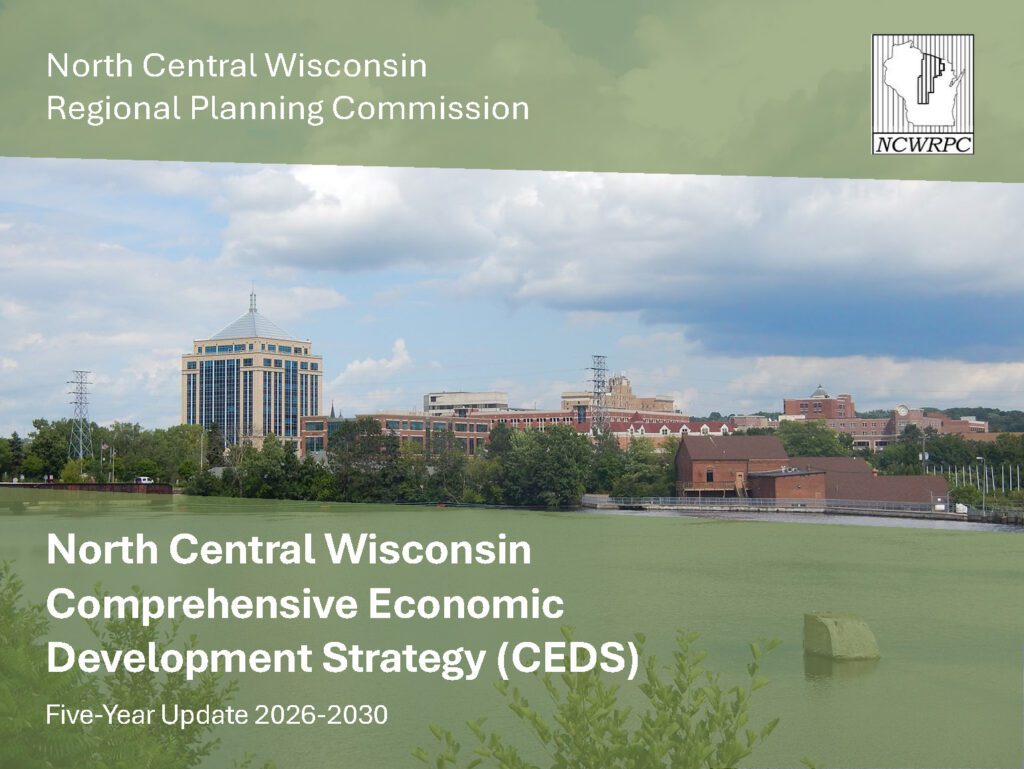
Comprehensive Economic Development Strategy 2026

The CEDS provides a detailed assessment of economic development conditions in North Central Wisconsin, and identifies a Regional Economic Development Strategy, which includes goals and objectives. This then provides the foundation for the NCWRPC economic development work plan. Along with maintaining our designation as an EDD, updating the CEDS provides access to grant funds from EDA for our Region.

The 2026 CEDS Five-Year Update consists of the following seven chapters: Introduction, Demographics & Employment, Economic Conditions, Existing Infrastructure, SWOT Analysis, Economic Development Resources, and Regional Strategy.

The Regional Strategy chapter contains a set of 7 goals, with each goal containing multiple objectives. These goals and objectives seek to strengthen the economy, improve economic resilience, and together formulate the Regional Strategy. The Action Plan at the end of the CEDS demonstrates the efforts that need to be taken to help implement the Regional Strategy.

Preparation and adoption of the CEDS maintains the Region’s EDD designation and also maintains grant eligibility for those participating units of government. This CEDS process maintains the Region’s eligibility as an Economic Development District (EDD) with the U.S. Economic Development Administration. The District consists of ten counties. These counties are Adams, Forest, Juneau, Langlade, Lincoln, Marathon, Oneida, Portage, Vilas, and Wood.

Annual Report 2024

The Annual Report is prepared to provide interested local, state, and federal officials as well as citizens with an overview of the activities undertaken by the NCWRPC over the last year. The report highlights our five core work areas:

• Economic Development
• Geographic Information Systems
• Intergovernmental Cooperation
• Land Use, and
• Transportation

In addition, the report meets the requirements as outlined in Wisconsin Statute 66.0309(8)(b) for annual report preparation. This is our 51st Annual Report. With your continued support, we look forward to another successful year in 2025.